

Maara Cave
About This Project
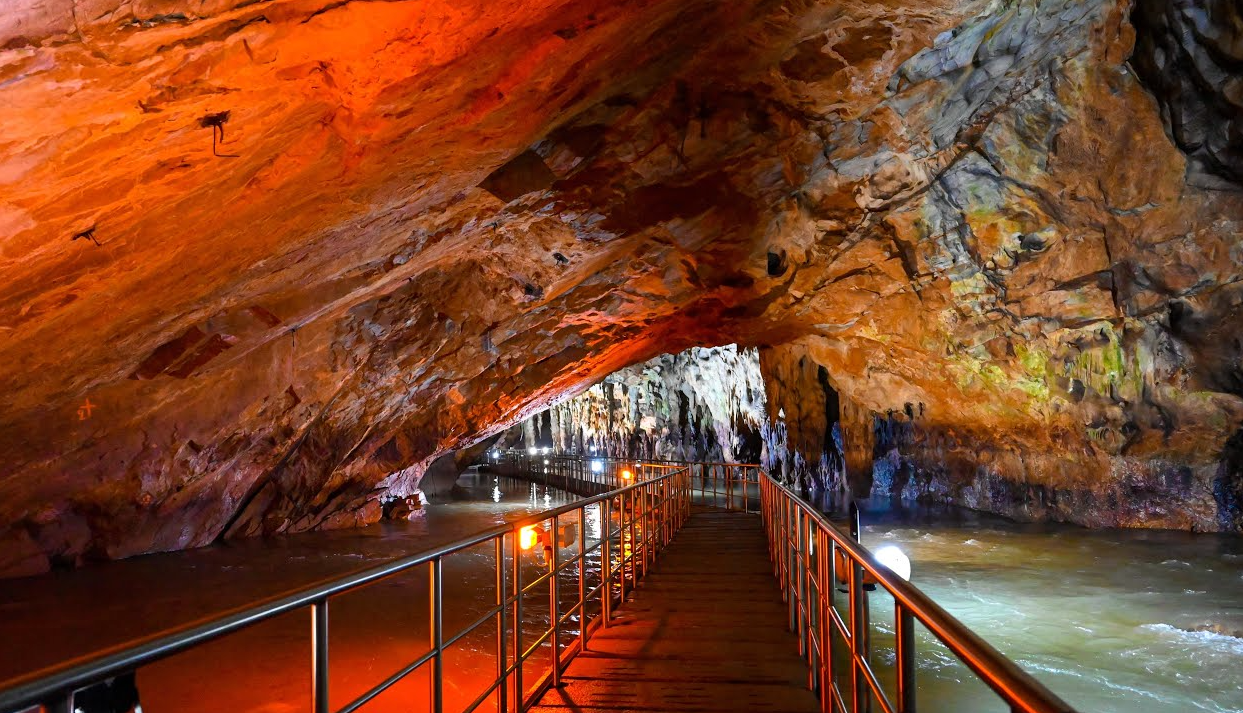
The Agitis Springs Cave (Maaras) is located at the northern edge of the Drama basin, on the southern foothills of Mount Falakro. It is 25 km NW of the city of Drama and 500m from the settlement of Agitis in the Municipality of Prosotsani. It is the largest known karst conduit in Greece to date, with a total length of over 15 km, of which approximately 10 km have been mapped.
Exploration efforts began in 1952 and are still ongoing. In 2000, the first section of the cave (500m long) was opened to the public.
The natural entrance to the cave is the exit point of the underground river named Agitis. The cave's development area is geologically part of the Rhodope massif, specifically the Sidironero unit.
During 1992, as part of the cave's development works, excavation surveys were carried out at two locations:
a) on the eastern slope of the corridor leading to the artificially opened entrance and
b) inside the natural entrance of the cave.
From the research south of the artificial entrance, two fossiliferous horizons emerged with mammal bones, primarily from animals of the Equidae family – but also Cervidae, Ursidae, Elephantidae, and Rhinocerotidae – as well as Middle Palaeolithic stone tools made from siliceous rocks and quartz.
Excavations inside the cave, north of the Angitis riverbed, revealed a prehistoric settlement characterized by three stone hearths. The pottery collected consists of fragments of utilitarian vessels (monochrome coarse handmade pottery), as well as fragments with graphite decoration. The typology and decoration of the vessels allow them to be dated to the end of the Neolithic period to the beginning of the Early Bronze Age.